
{art + innovation} #inspiration
You can scroll the shelf using ← and → keys
You can scroll the shelf using ← and → keys
What a grand name, first of all: The 21st Annual International Photographic Art Exposition. Damn. This had better be spectacular. It’s not just “regular photography”, not just from one city, and has been happening for over two decades.
Photo LA is its shortened name, and the event this year brings together 39 international galleries mixing vintage, contemporary, and multimedia to the Santa Monica Civic Auditorium. The 4-day event has its usual Hipness Requisite of opening party, celebrity names, a Smashbox make up chair, and DJs spinning in the café (serving smore’s cakes + gourmet grilled cheese). The photographic art portion offered panel discussions, author signings, docent walks, and photography societies. The most redeeming aspect is how Photo LA benefits the Los Angeles Contemporary Museum of Art’s photography department. I missed Moby at the Opening Party and didn’t buy tickets for his Saturday book signing, but who knew that he’s been taking photos longer than making music?
The setup lays out several galleries displaying their collectible art with their representative quietly poised to answer questions, take payment, or thwart thieves. Priced from a few hundred to over $10,000, I didn’t observe many purchases. Most people glanced at the photos like they’re strolling through a museum. This brings up the question of how much these prints resonate with collectors given how photographic art competes with all other forms of art collecting?
I found myself most attracted to the historical black and white vintage with human subjects. After seeing several exhibits with framed prints properly set against walls, Argentic’s display proved the most refreshing due it its accessibility. Argentic simply tacked up prints and displayed individual photos in a binder to easily flip through. The clear sleeves show casually hand written notes on the back of faded photos capturing rare moments. This display evokes an authentic realness because you feel like you’re looking through a close friend’s photo album. The distance between the photographer and collector feels closest.
What makes an image artistically endure through two centuries of technological evolution of cameras, software, and Internet?
Is it the moment in time, composition, lighting, subject, photographer, or all of the above?
Contrast Photo LA’s 11,000 fans versus Instagram skyrocketing from 1 million to 15 million app users in one year. Instagram lets anyone with a smart phone apply artistic affects to photos to reach millions of people, which presses against classically trained photographers who have been building their craft and identify for decades. Instagram and Photo LA similarly connect a community of impassioned people, which ultimately fosters a broader dialog.
Perhaps it all boils down to what makes our hearts flutter in that rush from past memories to future hopes, through our grand and mundane daily lives. Whether it’s shoved in a shoebox, hung in a gallery, or stored on a server/ cloud/ or hard drive… snap on!

A stunning sunset snapped from El Establo in Monteverde, Costa Rica timed to 2011’s final dusk.
Magnificent vista enabled by rooms set against tall, steep hillsides at this cattle ranch-turned-hotel.
You feel like you’re literally playing in the clouds in this cloud forest country.
Cheers to an amazing & abundant 2011!

“How much is that Polaroid?” I asked the shopkeeper.
“It’s $40. There’s no film for that camera anymore, though,” she responds.
The shopkeeper was wrong on both counts. Analog instant film is still produced today and eBay has cheaper Polaroids.
The revival of Polaroid instant film is a modern day fairytale, which sprinkled its magic dust over me. I dashed to eBay to buy my first Polaroid after absorbing The Impossible Project’s About Us page for 10 minutes.
The logo and site design effuse understated brilliance. However, it’s the story and idea of The Impossible Project, which inspired me in a flash. The saga spans the rise, fall, and total reinvention of instant film, enlivened by millions of fans holding that iconic 3×4 white rectangle.
Polaroid’s story begins in New York City in the 1940’s. Harvard dropout-turned-inventor, Edwin Land, creates the world’s first instant film when his daughter asked why she couldn’t see their family vacation’s pictures immediately. Land found the magic sauce by aligning millions of polarizing crystals under transparent plastic instead of growing one giant iodoquinine sulphate crystal. All 57 units of the first instant cameras sell out on its first day at a Boston department store in 1948. Yes, it is like the 1950’s version of Steve Jobs and Apple.
Alas, the digital tidal wave overtakes Polaroid as the corporation announces bankruptcy in 2001. An investment firm buys the 64 year-old company. As the raw materials for producing instant film grows scarce, Polaroid’s management decide to stop producing the required negatives in 2004. Legions of avid customers deplete the last stockpile by 2008 with their 300 million Polaroid cameras around the world.
Polaroid holds a factory closing party in the summer of 2008 in Enschede, Holland. The destruction crew arrives on Monday to dismantle Polaroid’s last machines. André Bosman is the engineering plant manager charged with closing the same plant where he rose up through 28 years. Bosman previously proposed an alternative plan of producing 100 million film packs per year with 200 employees from the current 5,000 employees. Management had other priorities than the thousands of customers who spent an average of $1,000 a year on Polaroid products.
Enter Dr. Florian Kaps, an Austrian entrepreneur, analog film fanatic, and manager of the Lomographic Society. Kaps already worked a reseller of Polaroid film so he knew of the dedicated customer demand. Kaps had been harassing Polaroid’s U.S. and German management teams for months to salvage instant film, but he only receives an invitation to the closing party.
The story goes like this: the plant manager charged with stopping the entrepreneur ends up finding an ally to save instant film over beer. Bosman and Kaps work through the weekend to halt the demolition, announce the news to shocked employees, and battle Management on Monday.
Polaroid management repeatedly said that it would be impossible for Kaps to reproduce Polaroid film because the intellectual property rights were already sold off. The impossible became “I’m possible” as Kaps plans to invent a entire new type of instant film.
The engineer and entrepreneur bring in the financier with a third co-founder, Marwan Saba. The partners raise $2.6M in 3 months by May 2009 to fund the new startup for one year. That financing buys the nearly scrapped machines, heats the factory to a required temperature, and hires back 10 employees averaging 30 years of Polaroid film experience. Check out a how Impossible films are made in this recent video.
The Impossible Project launches their first instant film in March 2010, the PX 100 and PX 600 Silver Shade. The colorful PX 70 Color hits the market 4 months later. They’re currently developing an 8×10 and 20×24 inch film format! How’s that for scrap booking?
The Impossible Project’s passion, vision, and tenacity knocks me over. They persisted up to the brink of destruction to innovate an entirely new design to go to market in one year. Kaps even worked with Paul Giambarba, the designer of the original packaging and brand, to design the 2010 version.
My eBay triumph arrives from Oregon during the summer of 2011. I first skipped over the mythical Polaroid instamatic as a young lass since it had come and gone by the late 80’s. This time around, I bought the JobPro2 since the black and yellow contrast hovers like a bumblebee around the subject. Flipping up the built-in flash reminds me of E.T. extending its long neck up. Building the camera battery into the film is completely alien to me.
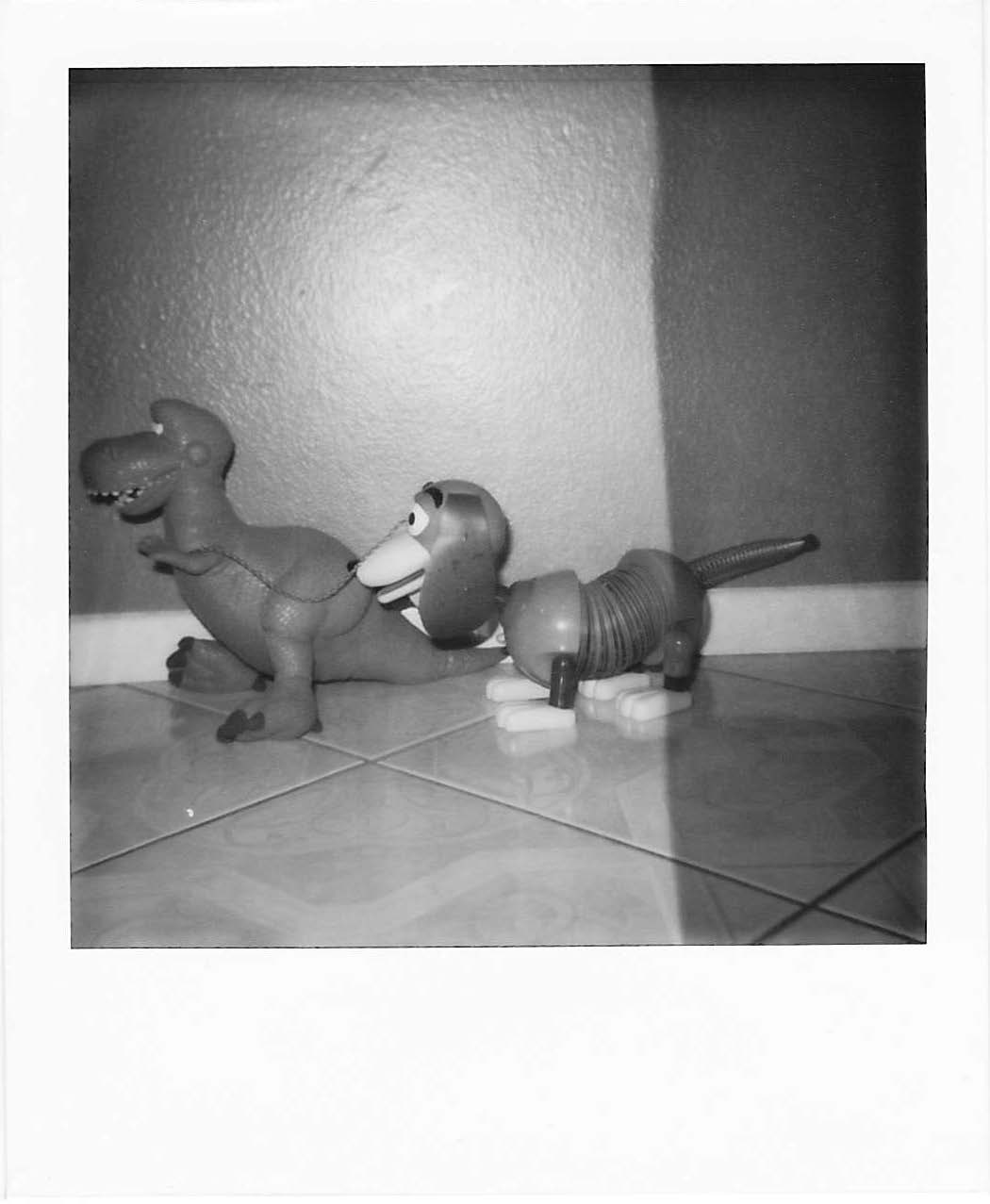
Peering through the 1cm viewfinder after years of looking at the 2×2.5 inch LCD screen feels oddly cool again. There is only 2X zoom: close or far. Knowing that I only had 8 black and white exposures forces me to carefully compose each frame. When was the last time you stored a box of instant film in your refrigerator?
The photographer can’t just press the red button and the picture spits out. One must immediately and swiftly cover the exposed film for the first 2 seconds and allow the masterpiece to develop upside down for 60-90 seconds. Each exposure is actually like an individual development room. Full development could take up to 24 hours…
This moment of randomness plays into my favorite part of using the Impossible Project’s film. The picture can turn too dark or white depending on the temperature and light of that moment. There is actually a sliver of skill and luck using this instant film. Your heart may sink or swim when flipping over that picture, but that’s the fun (or frustration)!
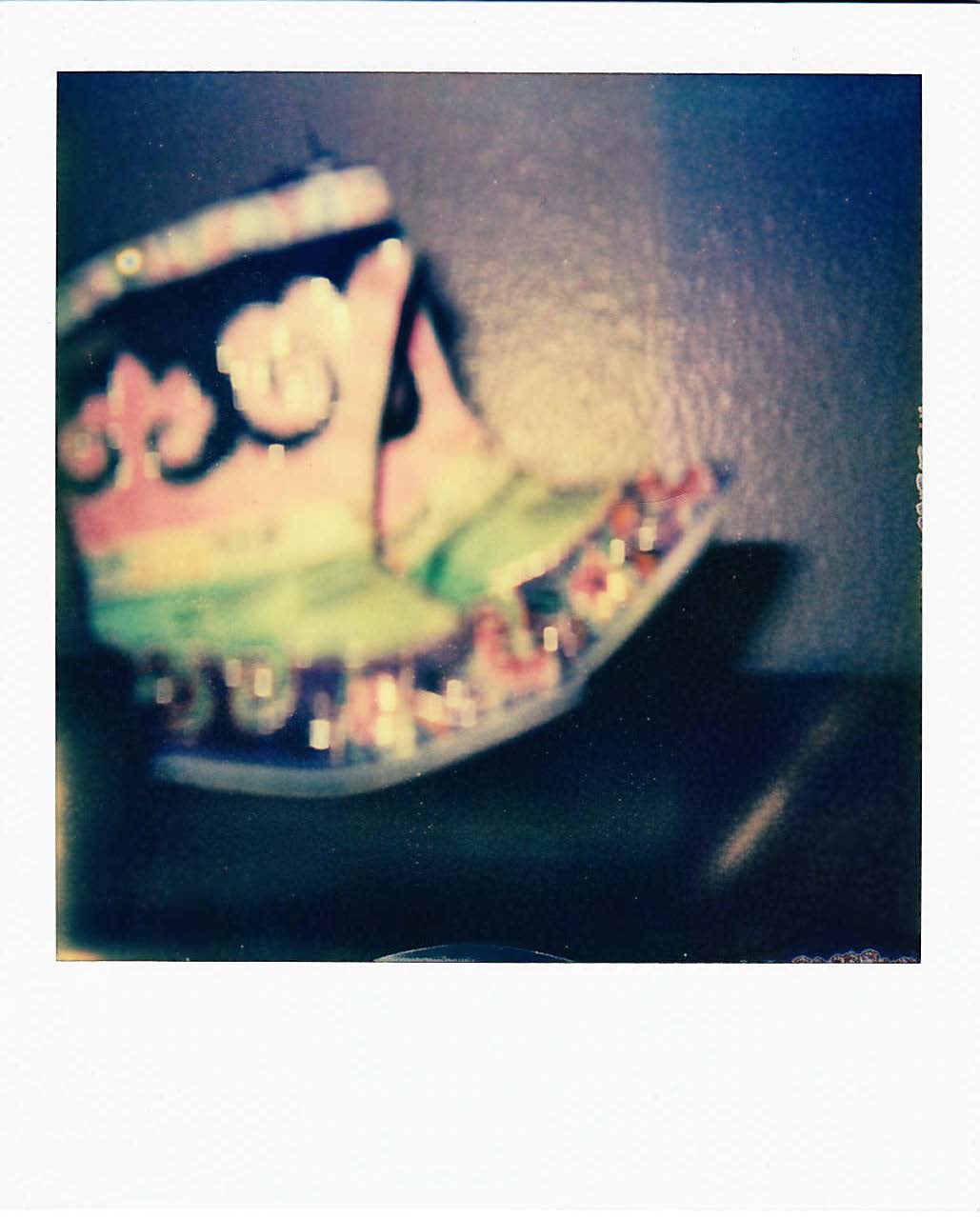
Images taken on instant film have an authentic, time warped feel, without Photoshop. I like the messy color and imperfect sharpness. You never know if you’ll get faint lines or blurry edges around the image. The whole look and feel is immediately wistful and yearning.
Instant analog film takes a chance.
I can’t wait to visit the Impossible Project Gallery store in New York City! For now, I’ll order film with a black frame for when the mood turns noir. Perhaps I’ll join The Impossible Project Flickr group with the other +5,100 members one day.
It’s astounding how these photo trials and triumphs started from one child’s question.


I want simplicity for Christmas.
Please bring us simplicity so that we may slow down, soak up and love deeper. We’ve been good gnomes.
We’d be able to study what accents our nature and pay off reasonable school loans by legal means.
We could craft meaningful, creative occupations that improves our community and enables enjoyable living.
I could walk the dog at 3:30 on Wednesday afternoons without guilt because my work is autonomous and flexible.
Many of us could afford a house that’s not prefabricated and located by the train tracks.
Parents can let their kids play in the dirt at the park and safely walk home alone after dark.
We’d have time to cook instead defaulting to take out after a long commute. Better yet, we could work from home while connected to high caliber peers around the world.
No, simple living isn’t boring. Simplicity transcends class, culture and countries. It’s an intuitive feeling of satisfaction that endures through time and technology. It comes down to having the time and means to enjoy shared experiences with people who matter.
We promise not to take simplicity for granted like another half-hearted New Year’s resolution. I realize you have a limited supply chain and unionized elves up in the North Pole. If simplicity is too complex, I’d be happy with a motorized train set that loops around the tracks.
Sincerely,
Gnome Gnome
It felt refreshing to attend Patchwork, the bi-annual crafts fair in Santa, Ana, California after a bulging weekend of Thanksgiving turkey and Black Friday’s mass consumerism. This Orange Country version of Etsy sparked my wonderment about the Arts and Crafts art movement popular in America between 1910-1925. The parallels between the current handmade vogue and twentieth century social-political movement interweave like a knitted beanie.
This indie art fair had a large presence! Around 60-100 art and food vendors dotted the closed off neighborhood street on a hot, blue-sky day. An eclectic mix of people, dogs, and kids sauntered around booths ranging from soaps, cards, knits, t-shirts, prints, posters, jewelry, kids clothes, toys, and pet products.
Two food trucks, a DJ, and bike valet proved to be nice touches. I took a roller derby postcard from the OC Roller Girls and tried a delicious grilled cheese from local restaurant, Old Vine Café. The aunt and niece team of Delilah Snell and Nicole Stevenson organize Patchwork in 3 Southern California locations in December and May each year.
Many Patchwork sellers already operate their own Etsy store. Although Etsy started in 2005 and has over 800,000 sellers, these craft fairs could not exist earlier. We complacently consumed through years of Ikea, eBay, and WalMart without a thought of an alternative. None of the crafters, technology, or social groundswell existed together in a time frame to enable today’s “buy handmade” sentiment. Grandmother’s crochet finally busted out of the den as new e-commerce platforms enabled makers to setup individual niche shops complete with PayPal.
The current craft craze actually has its roots in over 100 years ago in Europe. The Arts and Crafts art movement spanned between1860 and 1910 in England, propelled by writer/artist, William Morris. The movement hopped to America in the early 1900’s. The new rise of America factories generated shoddy quality work, which craft advocates called for the revival of skilled craftsmen. The design principles promoted the dual craftsman-designer artist and advocated the entire piece’s construction by one crafter instead of the division of labor used in mass production.
The movement’s motto was “Truth in Material.” The craft idea revolved around the material, construction and detail, not the ornate decoration prevalent at the time. This aesthetic spread throughout Europe and Asia across furniture, woodwork, stained glass, leather work, lace making, embroidery, jewelry, metalwork, enameling, ceramics, architecture, painting, sculpture, illustration, book making, decorative arts. Publications, societies, and schools sprouted around the world.
The social reform aspect of Arts and Crafts stands out for me. The social critique writings of John Ruskin and others had the crazy notion of designers taking pride in their skilled craft instead of slaving away in 14-hour days in windowless factories with other drones. Hmmmmm…
Just as women played a significant role throughout the arts and crafts movement, most of Patchwork’s vendors were women. Buyers now take pride in sharing the story of how their object is handmade, while legions of makers dream of quitting their draining day job. This sounds just like America 100 years ago.
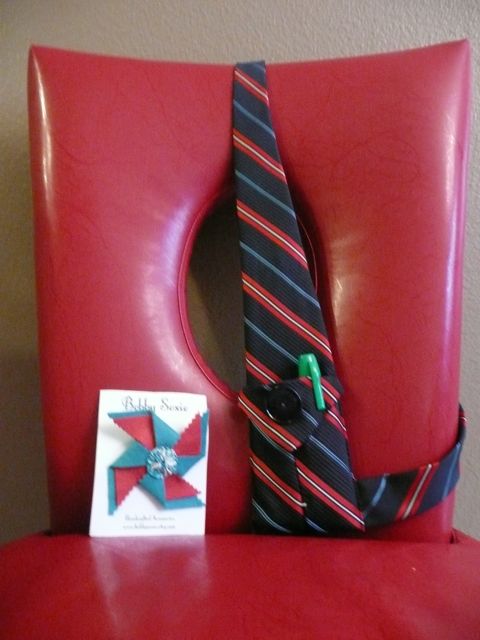
Assessing my two purchases of the day brings satisfaction. A wide polyester Sears tie gets re-purposed into a two-pocketed shoulder sling for the bare essentials: phone, keys, ATM card. A felt pin resembling a whimsical pinwheel brings distinction from the over-played flower.
Having the option between local handcrafts and global online shopping brings today’s fun and responsibility. Just take a giggle at Regretsy, “Where DIY Meets WTF.”




 Freehand Life