
{art + innovation} #inspiration
You can scroll the shelf using ← and → keys
You can scroll the shelf using ← and → keys
I’m keeping this inspirational cocktail on repeat. Mix syncopated animation + typography to bring already powerful words to life. Cheers!
Having missed Comic Con and Adult Con (intentional joke), I checked out the sixth annual Designer Con in Pasadena, California. Originally called the Vinyl Toy Network, “Designer” remains a wee misnomer as the 90 vendors are still largely collectible toy designers and manufactures. The show still proved fun and quirky. Where else can one meet Stinky Poo, Putrid Pal, and CO2 Monsters? Plus, seeing guys and girls wearing those ridiculous animal hood/tail thingees was stranger than any imagined creature.
The general theme of these adult designer toys is the yin/yang of the cute + grotesque. Many creative processes seemed to start from an original illustration, which manifests into portable mediums like plush, figurines, dolls, posters, pins, and t-shirts. Highly detailed, film studio level sculptures impressed me the most. Long live these independent, creative entrepreneurs. Sawdust Bear (grody monsters in science jars), Beastlies (adoro monsters), and BugHouse (funky home furnishings) won my Top Three.
Seeing artists directly illustrating a character in a fan’s sketch book made me wish for my sketch book.. for next year.
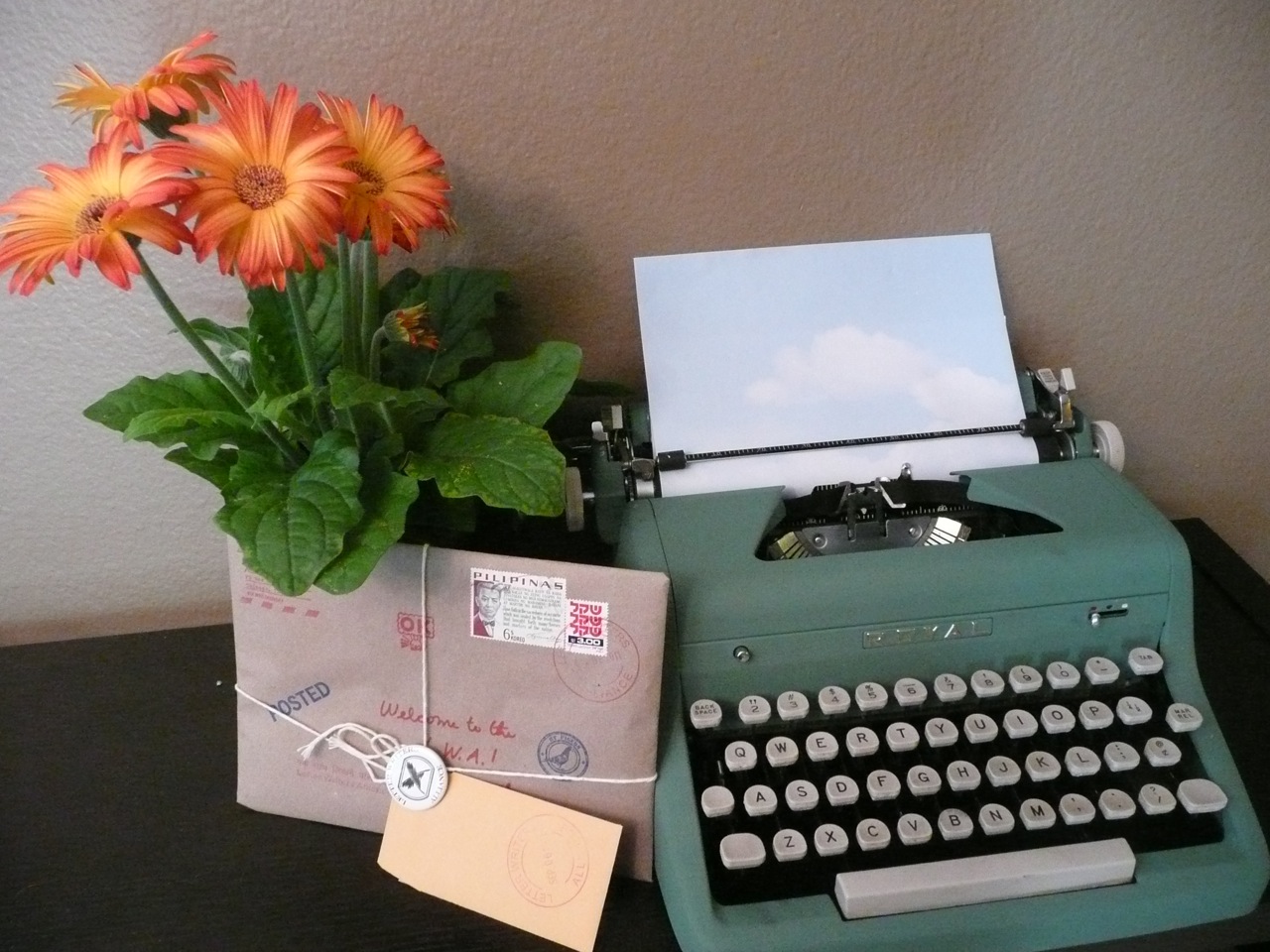
I l–o–v–e manual typewriters. I adore the analog beauties for all the reasons contrary to digital word processing. There exists a revered ceremony, slow mindfulness, and tactile alertness not possible on my iPad or laptop. Dormant senses suddenly pique like when riding a bike. I’m plastic and silicon free, baby.
The solid, metal construction stands sturdy, quietly waiting; yet beckoning the pondering poet-writer to pound away. I’m smitten each time I gaze at the beautiful mid-century construction of my 1948 Royal Quiet De Luxe. It’s ready to go without a power cord or depleting battery. Analog typewriters are splendid in their single purpose of mechanically transforming human thoughts into a shareable medium from the hard work of its writer.
It’s twelve pounds of writing purity.
The ceremony begins by sitting down in its own space, the special typewriter desk. The blank piece of paper descends into the black cylinder, resting by the marked paper guide. Turning the nob emits a wonderful ratcheting sound as the anticipation builds for that just-right margin layout. Pushing back the paper lock secures the paper and waves the green light for my imagination to unleash. I relish in slowing down and taking a longer time.
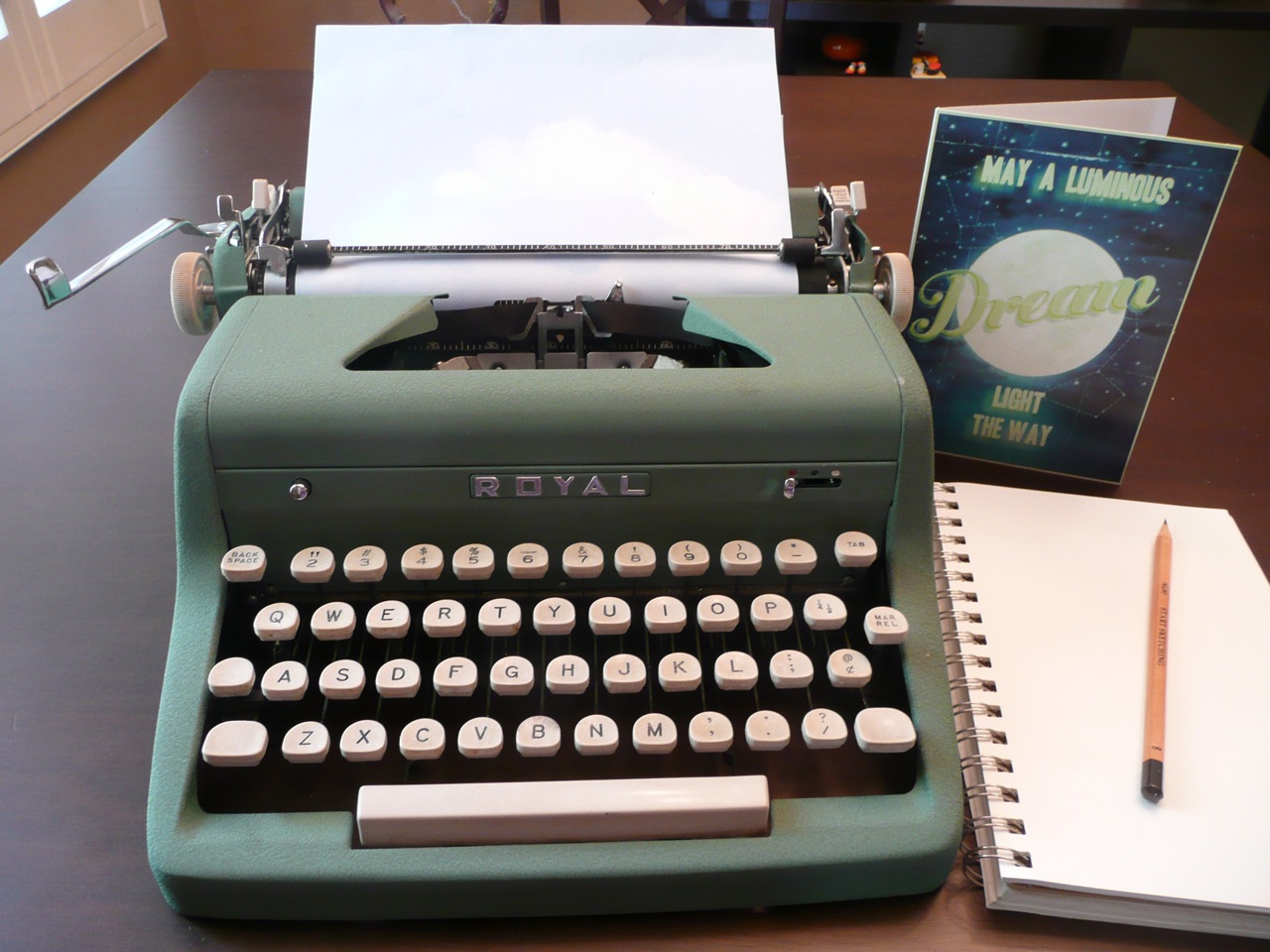
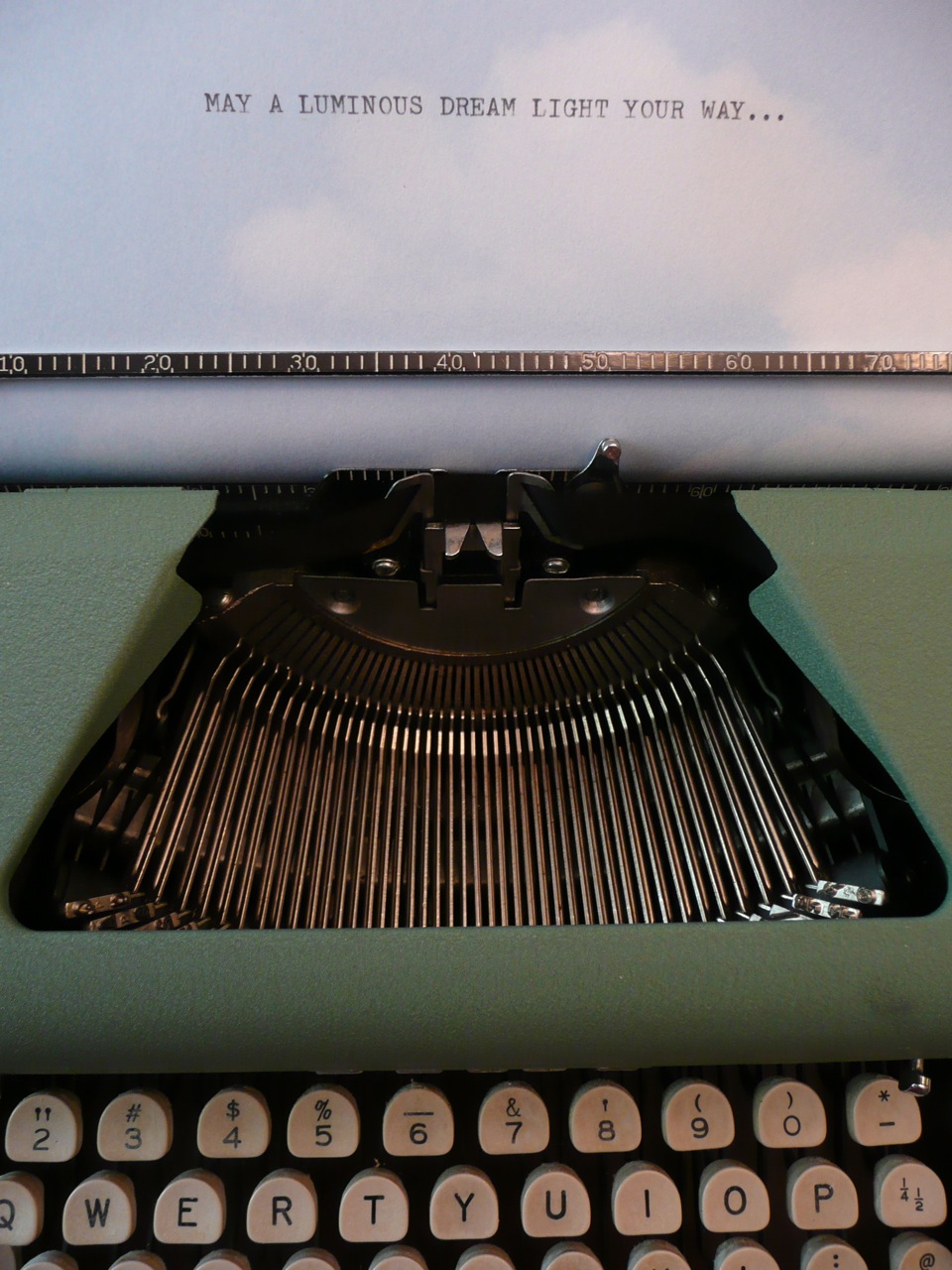
The sound of each typebar hitting the paper is the best! It’s like a mini-stamp of assertion offset by the sweetly demurring ding at the end of line. That bell chime at each margin end is like a happy hum of a reward for crossing that vast blank paper. Hitting each key focuses my mind on the letter, number, or symbol, which is about to compose the word that’s part of the grander concept, sentiment or imagery. A different part of my brain works when using manual typewriters. The physicality of using an analog typewriter connects me closer to the work. Each keystroke is a commitment, which cannot be wiped away via pixels. It’s magnificently manual.
Whoever designed the Roman typewriter typeface is a genius. Each fat, stocky letter has its own “I’m Here!” presence, delineated by each letter’s equal spacing. Reviewing the typed paper reveals how each letter has its own personality based on the ink pattern. It’s no wonder that old school detective shows tie the crook back to the distinct typewriter he used to write the ransom note. “Egads! That splotchy “a” clearly comes from his 1937 Remington Noiseless.”
Pushing the carriage return arm plays into the entire manual ceremony. The lack of an erasing ability poses a challenge, quandary or game to the typist. Using a modern electric typewriter with its eraser is more of an annoyance, which makes me just yearn for the efficient computer.
Imagining how novelists craft hundreds of pages on analog typewriters swells up new appreciation for their technical and creative skills. Check out Life magazine’s black and white gallery of famous writers and their trusty typewriters!
It’s amazing how one passion naturally leads us to discover other gems. Alan Seaver’s Machines of Loving Grace offers the best site for over 10 typewriter brands, chock full of original manuals over his twenty year collection. The Chicago-based Letter Writers Alliance has over 1,800 members dedicated to the lost art of letter writing with monthly writing socials.
Calling my local typewriter repairman revealed that he had other three service calls that day. Are vintage typewriters another hipster trend? Like all subcultures, a full spectrum of collectors co-exists. What is actually more common are the raised eyebrows from people when I exult the virtues of manual typewriters.
I don’t need the $500 refurbished retro-cool or bevy of several typewriters. Appreciating the feeling and mechanics of analog typewriters is more of my type.
Shot entirely with the Nokia N8 Smartphone. Winner of the 2011 Nokia Shorts from British director JW Griffiths.

I’ve stumbled upon two labyrinth articles in the last two weeks. Coincidence? Not really. By the time anything gets to me, the trend has already been mainstream for ages. In this case, the global practice has been around for 4000 years.
My idea of a labyrinth at the time descended into a fuzzy recollection of an 80’s movie aptly called Labyrinth (too bad I recently cancelled my Netflix account like the other 1 million customers).
I quickly learned the difference between a maze and a labyrinth. A maze is designed to confuse the walker with dead ends, twists, and loop backs. My memory of getting lost in the giant, Great Corn Maze of 2006 around Halloween flooded back…
A labyrinth, in contrast, is unicursal: one way in and one way out.
This trek can’t get any simpler.
I felt intrigued to seek a real labyrinth after reading how people’s lives can change with labyrinths. By the power of Google, there happens to be a public labyrinth at a church about 10 miles from my abode! Since they clearly welcomed everyone on their site, I dashed into my trusty car.
My dusk arrival revealed a people-free courtyard. Schweet!
It turns out that the church has the Chartes type of labyrinth, named after France’s Chartes Cathedral. This labyrinth construction is painted concrete in a corner courtyard flanked by Roman columns. The “material” for labyrinths ranges from stones, marble, grass, dirt, and virtual. It’s possible that Medieval labyrinths were originally created for people unable to make real life pilgrimages. Labyrinths are now found on hospital grounds, spas, parks, and private gardens.
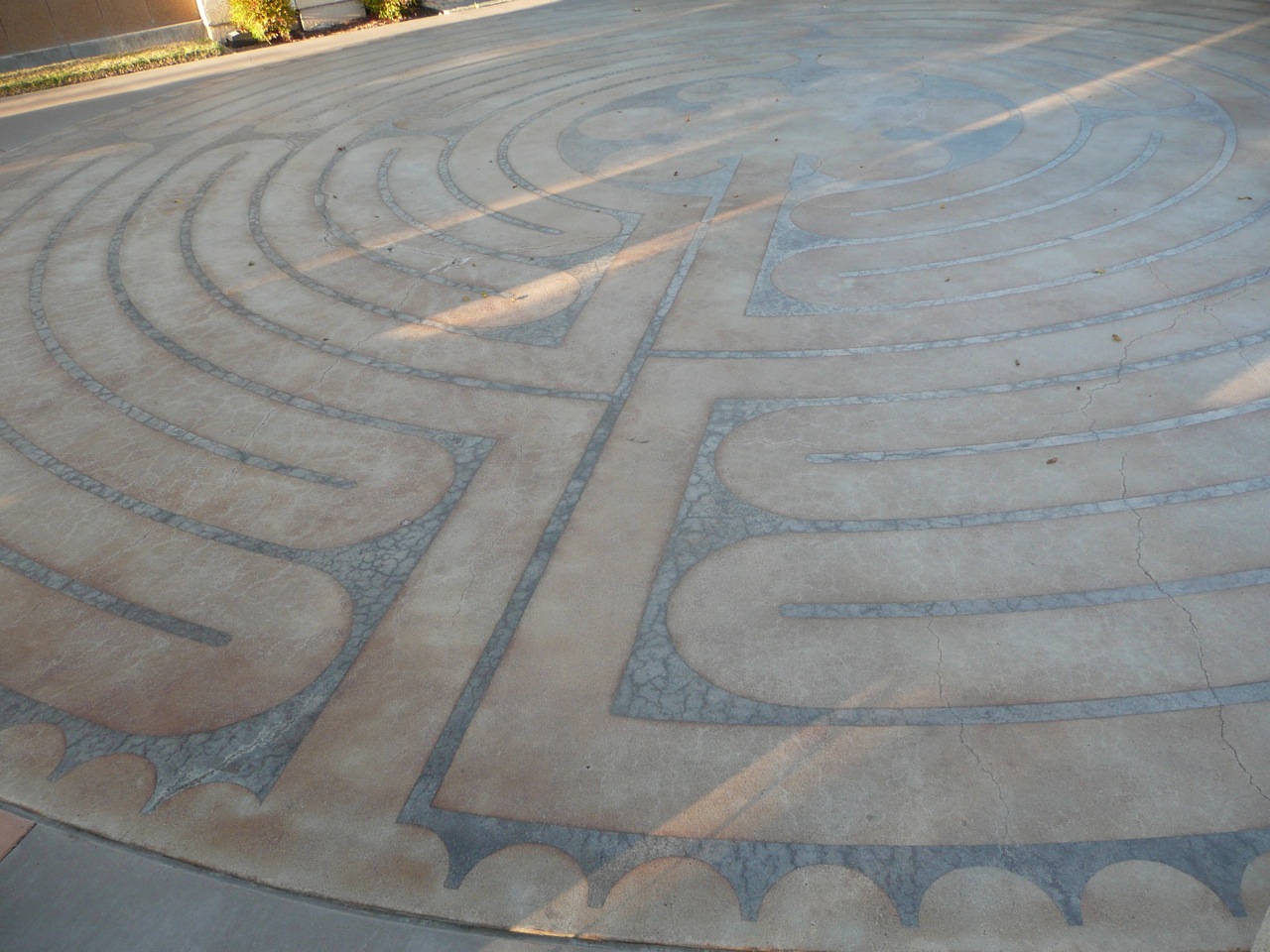
Viewing it: looks like a brain! The planning for the first labyrinths must have come from one gnarly doodle before the prototype.
Walking it: looks like our sinuous intestines! Talk about going with your gut.
Feeling it: walking barefoot on the concrete felt solid, with patches of coolness, mixed with crunches of dried leaves. Walking the folded, stacked curves conjured up bad Disneyland ride lines for a flash.
With a 4000-year history, there can be a process to walking labyrinths, of course. There is ultimately no right or wrong way to walk labyrinths; just ask the kids playing in them.
There can be three “phases” in walking labyrinths, which can enrich the seeker’s experience.
The walking mediation afforded by labyrinths works for me, versus sitting down through Buddhist zazen in a zendo or in my living room. The Chartes style allows the walker to traverse all four quadrants, weaving between the outer rim and center. The conceptual idea of “walking your path” in life becomes more real. I found myself ruminating more than releasing any mental weights this time.
Reaching the center offers a nice respite, even a micro accomplishment. It’s always a different perspective when one lingers at the center. I walked back in the same pace as I started. However, I swiftly reached the end and didn’t want it to end.
I saw that having one way in and one way out of labyrinths is a metaphor for life and death. Pause on that one for a moment.
I wondered if I had been on one crazy, long maze up to now or if I had always been on my one path in my own invisible labyrinth? I’ll be back regardless.
Try the labyrinth locator for yourself.

 Freehand Life